The first Solent Cultural Forum, held in Southampton last week, brought together voices from across the region’s cultural sector to explore how collaboration and devolution could shape its future.
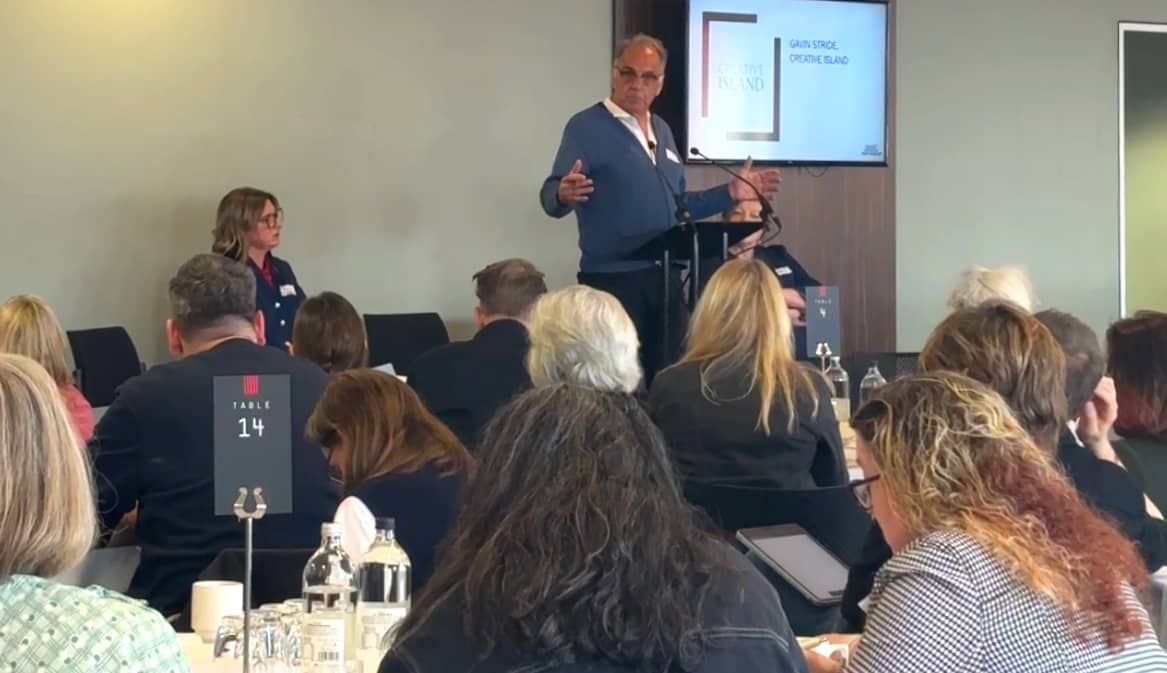
Opening the morning session, Gavin Stride (Creative Island’s Director) emphasised a shift in thinking—from ownership to sharing—as a defining feature of successful cultural work. He encouraged those attending to take risks, build relationships and connect meaningfully with others in the room.
Celebrating collaboration and regional projects
Gemma Nichols (CEO of Portsmouth Creates) highlighted the distinctiveness of collaboration within the cultural sector. She shared examples such as City Reflections in Southampton and the Playland project in Portsmouth, which supports young people’s entry into the creative industries.
She also pointed to Department in Ryde as a successful regional initiative and encouraged pride in local organisations and their contributions.
Devolution as a route to empowerment
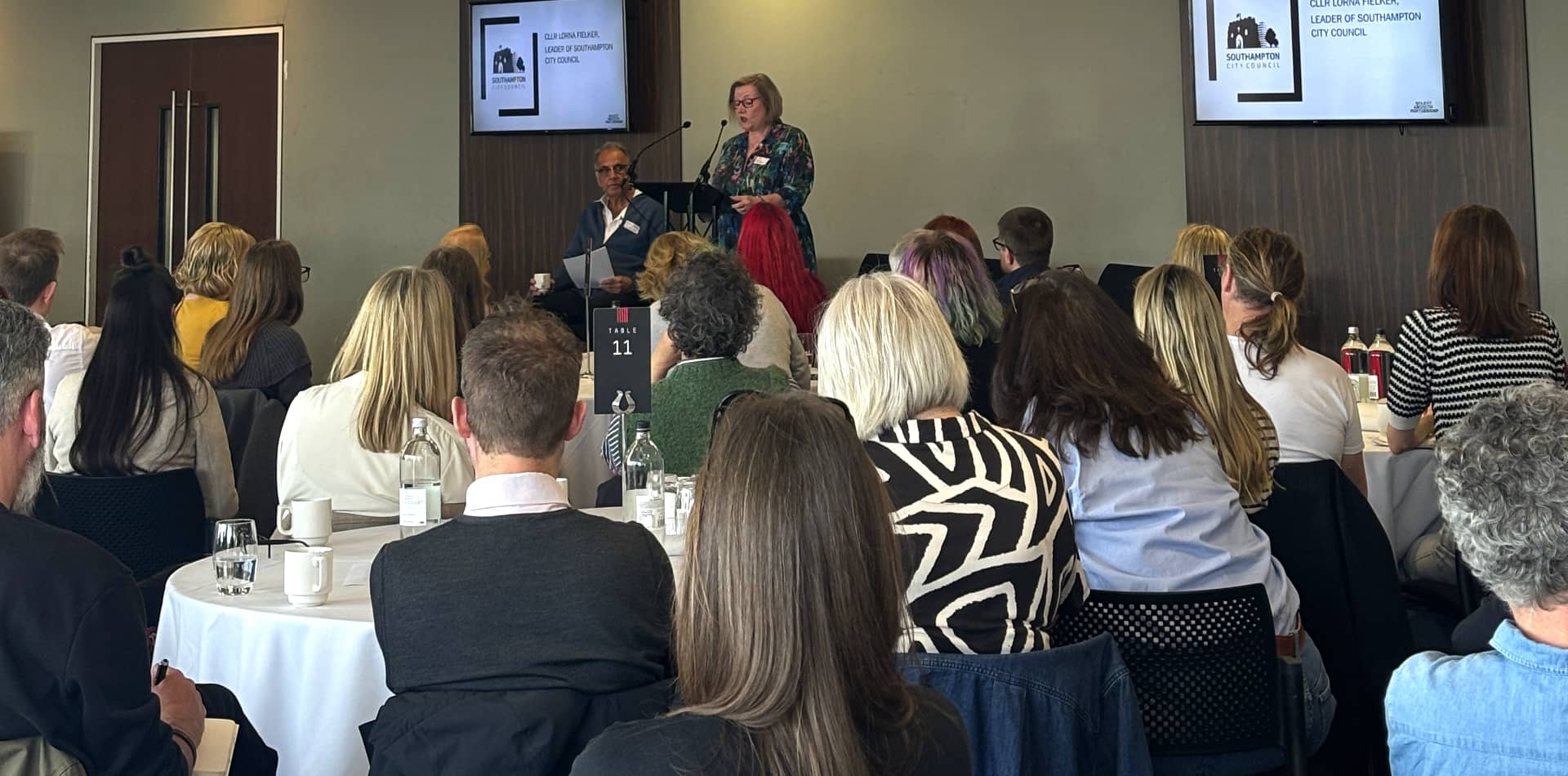
Leader of Southampton City Council, Lorna Fielker, explained how devolution could unlock powers and funding currently held centrally, bringing decision-making closer to communities. She cited Greater Manchester and Liverpool as examples of where devolution has enabled culture to drive regional prosperity.
She urged the sector to participate in the public consultation on devolution, open until 13th April, and to lobby mayoral candidates to ensure cultural priorities are included in their plans.
Culture’s economic role in the region
Isle of Wight cabinet member for culture, Julie Jones-Evans, spoke about cultural regeneration on the Isle of Wight, where long-term partnerships have led to significant investment and sector growth. She described how creative organisations are now treated as equals in the economic environment.
Steve Pitt, leader of Portsmouth City Council, underlined this point, stating that culture and economic development are intertwined. He noted that the creative industries in the Solent area contribute £1.5 billion in Gross Value Added (GVA) annually and support 40,000 jobs.
The Arts Council’s evolving approach
Phil Gibby (Area Director, South West at Arts Council England) acknowledged the challenges of devolution but framed them as opportunities for adaptability. He stressed the need for collaboration and cited successful cultural plans in other regions, such as the West of England, as models to learn from.
He called on those present to make their voices heard through consultation and collective advocacy.
Shaping the Solent Cultural Plan
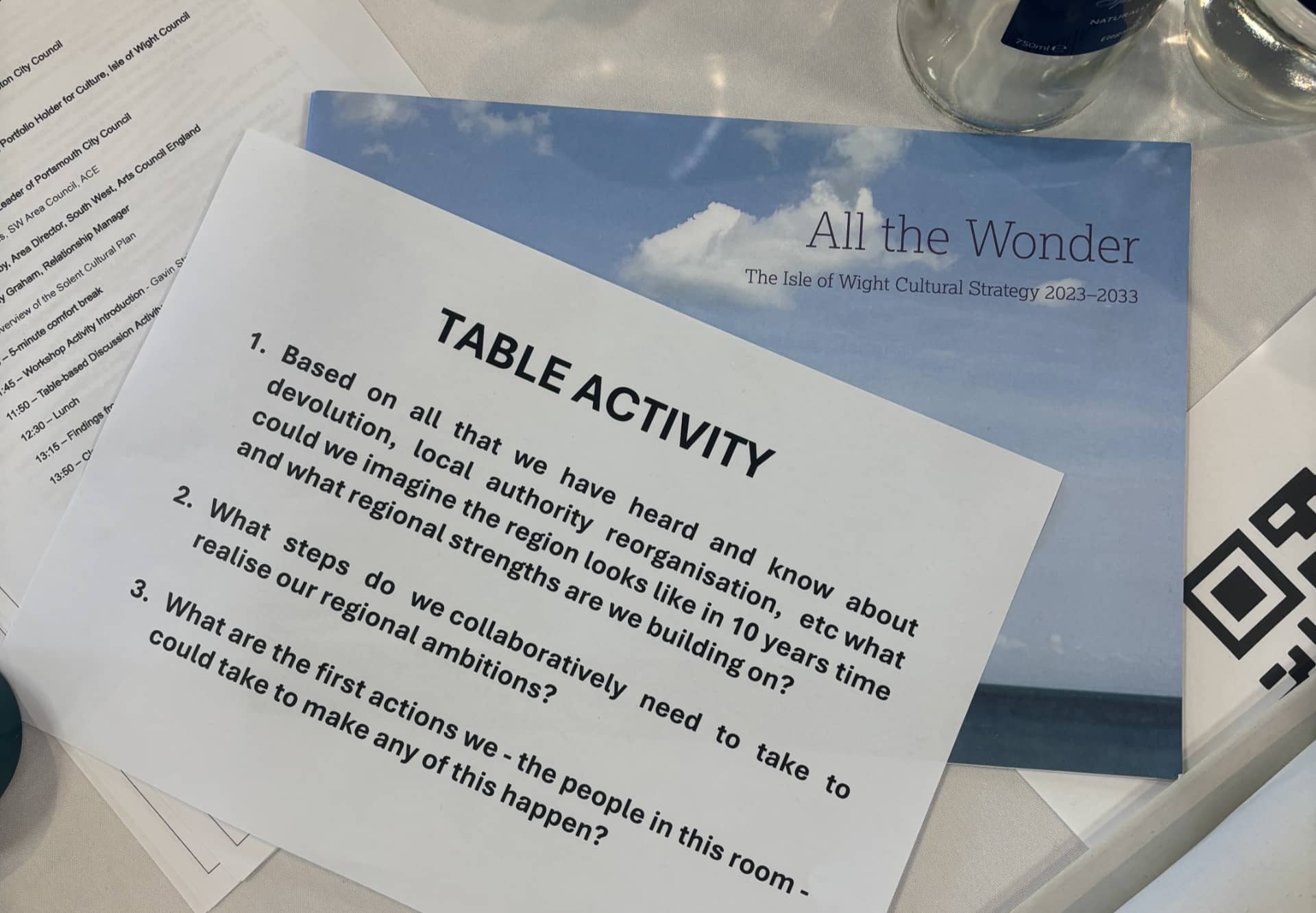
Ginny Graham (Relationship Manager at Arts Council England) presented the Solent Cultural Plan, which focuses on five key priorities: creative enterprise, cultural education and skills, cultural tourism, collaborative working and recognising existing regional strengths.
She encouraged those attending to share their ambitions and help shape the cultural landscape of the Solent through open dialogue and practical action.
Afternoon session: driving collective strategy and future-proofing
The afternoon continued with an emphasis on integrating cultural priorities into the manifesto of the region’s future mayor.
Participants discussed how regular communication, mutual support and stronger regional networking could help embed culture more deeply in policy and infrastructure planning.
Stronger connections and shared resources
Speakers emphasised the need for a connected cultural ecosystem. One metaphor, likening the room to a salad where each ingredient retains its uniqueness, captured the mood: individuality should be preserved within shared purpose.
Other thoughts shared included a call for improved knowledge-sharing across the region and that strategic alignment between cultural needs and transport or infrastructure planning would strengthen regional cohesion.
Embracing water and celebrating diversity
Several contributors proposed the idea of leveraging the Solent’s water geography to connect, rather than divide, communities. There was a clear appetite for celebrating the region’s diversity—its heritage, geography and talent—through collaboration and shared platforms.
Calls were made for creativity to be placed at the heart of educational policy, with mayoral candidates urged to commit to cultural investment and leadership.
Listening to grassroots and ensuring sustainability
Concerns were raised about the need to include grassroots communities in decision-making processes. Attendees stressed that devolution must serve all parts of the cultural sector—not just the most visible or well-resourced.
There was also a strong emphasis on sustainability: not only in environmental terms, but also in funding models and long-term organisational capacity.
Closing thoughts and collective ambition
The day concluded with a renewed commitment to shaping the region’s cultural ecology together.
Those attending were urged to engage with the devolution process, ensure culture and creativity remains central to regional planning, and continue building a connected and ambitious cultural identity for the Solent.
The next meeting is expected in the autumn, with continued emphasis on leadership, collaboration and collective strategy.